%203%20(23).png)
%202%20(24).png)
%202%20(25).png)
%202%20(26).png)

%201%20(3).png)
Why Choose Thermoplastic for Parking Lot Striping in Texas?
This guide breaks down the five key reasons why you should choose thermoplastic materials for parking lot striping in Texas.
If you're planning a parking lot striping project in Texas, there are two main options to choose between: traditional paint and thermoplastic. Paint is still a common choice for smaller projects, but thermoplastic is becoming more and more popular because of its long lifespan and superior performance.
So, why choose thermoplastic for parking lot striping in Texas? We've found that thermoplastic pavement markings are more durable and better at handling the state's challenging climate. Keep reading for a more detailed breakdown.
Key Takeaways
Thermoplastic parking lot striping lasts significantly longer than traditional paint and offers better visibility during the day and at night thanks to embedded glass beads.
Standard paint can quickly be worn down by Texas heat, UV exposure, heavy traffic, and harsh weather conditions, while thermoplastic is highly resistant to these environmental factors.
Although thermoplastic striping costs more upfront, you can actually save money over time because you need less frequent repainting.
Thermoplastic line striping requires specialized equipment and trained crews for proper installation.
What Is Thermoplastic Striping?

Thermoplastic striping uses a solid material that's made from resins, pigments, binders, and reflective glass beads. It's different from paint, which dries after application. Thermoplastic materials actually become liquid when heated.
When we install thermoplastic on your parking lot, we'll heat the material to high temperatures before applying it to the pavement surface. As it cools, it hardens into a thick, durable pavement marking that bonds to the asphalt.
You might not be able to identify thermoplastic at a glance, but you'll see these pavement markings throughout Texas, especially in areas that get a lot of traffic.
If you want proof of their durability and visibility, thermoplastic markings are used extensively by the Texas Department of Transportation across the state's transportation network.
For more information about Texas pavement marking standards, see the Texas Department of Transportation Pavement Markings Manual.
How Thermoplastic Performs Well in Texas
Texas presents unique challenges for any pavement marking system, with summer temperatures regularly exceeding 100°F in many parts of the state and intense UV exposure throughout much of the year. And then there are the increasingly frequent instances of severe storms, heavy rainfall, and constant traffic, which all create additional wear and tear.
Traditional paint can fade quickly under these conditions and typically lasts only 12–18 months in Texas. But thermoplastic is highly resistant to heat, sunlight, moisture, and traffic, which means it maintains its appearance longer and helps protect your investment. It lasts up to 3–5 times longer than paint, hence its popularity for commercial lots in Texas.
Here's a breakdown of the 5 benefits of thermoplastic striping in Texas.
1. Better Visibility for Drivers and Pedestrians
One of the biggest advantages of thermoplastic markings is their improved visibility.
When thermoplastic is applied to a surface, reflective glass beads are added into the heated material, and more can be added to the surface. These improve visibility when vehicle headlights hit the markings at night, making it easier for drivers to identify parking spaces, directional arrows, crosswalks, fire lanes, and safety symbols more easily.
If your business operates after dark, this improved visibility can play an important role in keeping your customers and staff safe. And it's something that won't quickly fade, either, as new glass beads are continuously exposed as the surface wears.
2. Lasts Longer Than Paint
When you're comparing paint and thermoplastic, you'll probably be interested in durability.
If we look at paint, this sits on the pavement surface and gradually wears away due to traffic and sunlight. In comparison, thermoplastic is a thicker pavement marking that withstands these conditions more effectively.
While the lifespan of thermoplastic markings varies depending on traffic volume and site conditions, they can typically last up to 15 to 20 years.
3. Lower Long-Term Maintenance Costs
It's understandable if you focus on the upfront cost of a striping project, which may lead you to choose paint, since this usually costs less initially. In fact, because of its lower upfront cost, we think paint is a suitable option for some scenarios. For instance, it's more cost-effective for striping low-traffic areas.
But it's worth looking beyond installation cost to get a complete comparison between the two. Paint needs to be re-applied more frequently, which means maintenance expenses can accumulate over time.
Thermoplastic striping costs more at installation, but it reduces long-term maintenance costs significantly. That means your business will face:
Less downtime
Fewer maintenance disruptions
Lower labor costs
Reduced equipment expenses
Better long-term value
If you have a busy commercial property, reducing maintenance visits can save you both time and money.
4. Ideal for High Traffic Areas
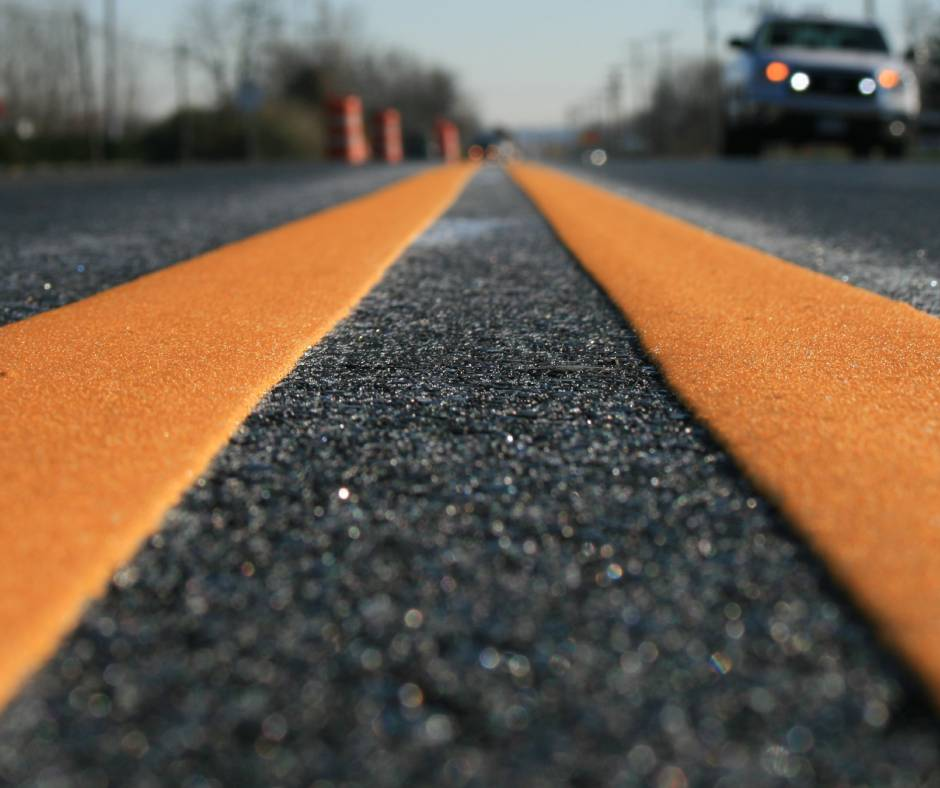
Not every parking lot needs thermoplastic! For instance, if you have a small office with limited daily traffic, we'll most likely recommend traditional paint.
But if you have a high-traffic area, like a shopping center, hospital, airport, university, large apartment community, sports venue, or municipal facility, thousands of vehicles may cross the same markings every week.
Thermoplastic pavement markings handle this constant traffic more effectively than paint, which makes them a more attractive option for your business.
They can be used across multiple applications, including:
Parking space lines
Directional arrows
Crosswalks
Stop bars
Traffic control markings
School zone markings
Loading zones
5. Creates a More Professional Appearance
We all know the importance of creating the right first impression, and if your parking lot has faded lines, your property will look neglected even when the building itself is well-maintained.
Thermoplastic markings help maintain a clean, professional appearance because they stay visible longer, delivering crisp lines and sharp symbols that are easy to see for years.
If your business is customer-facing, you'll offer a better overall experience by maintaining attractive parking lot markings. You're showing customers that you care about attention to detail, as well as helping them get around the property more easily.
FAQ
How is thermoplastic applied?
Thermoplastic is installed differently from traditional paint striping. Our striping team will use specialized equipment to heat the thermoplastic material to application temperature before applying it directly to the asphalt surface. As it cools, the material hardens and forms a durable bond with the pavement.
Is thermoplastic better than paint for parking lot striping?
In many situations, yes, thermoplastic is better than paint for striping a parking lot. Thermoplastic generally offers better durability, visibility, and longevity than paint, especially in high-traffic areas. But if your lot doesn't see a lot of traffic, traditional paint might be just fine for you.
How long do thermoplastic pavement markings last?
The lifespan of thermoplastic markings varies based on traffic volume, weather, and maintenance practices, but they typically last much longer than traditional paint markings.
Is thermoplastic more expensive than paint?
Yes, thermoplastic usually has a higher upfront cost compared to paint because of the material and specialized equipment required for installation. But because it lasts longer, its long-term costs are lower because less frequent maintenance is required.


Comments